Slide 3 of 7

Two approaches to database monitoring

Two approaches to database monitoring

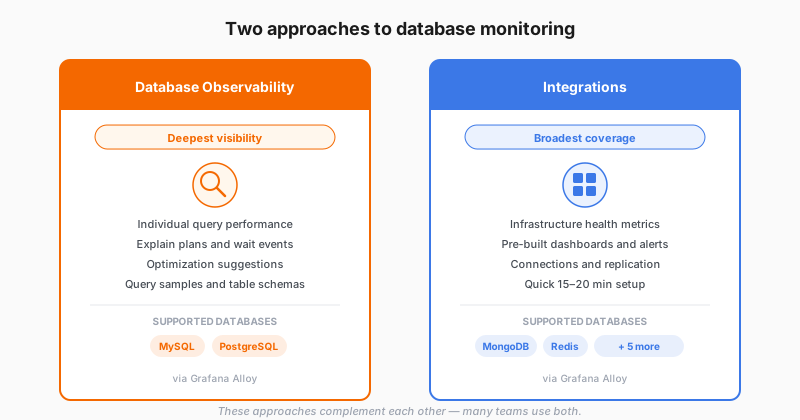
Grafana Cloud offers two ways to monitor databases. Each serves a different purpose.
Two approaches to database monitoring

Database ObservabilityIntegrations
What it doesDeep query-level monitoringDatabase health metrics
DepthIndividual queries, explain plans, wait eventsAggregate metrics, dashboards, alerts
How it worksGrafana Alloy with Database Observability componentsGrafana Alloy with integration config
DashboardsPurpose-built query performance viewsPre-built health dashboards
Supported databasesMySQL, PostgreSQLMongoDB, Redis, Memcached, Cassandra, Oracle, and more

When each approach shines

  • Database Observability — You need to understand why queries are slow, not just that they’re slow. See individual query execution plans, wait events, and optimization suggestions.
  • Integrations — Your database isn’t supported by Database Observability yet, or you need broad health metrics with pre-built dashboards and alerts.

The key insight: These approaches complement each other. Many teams use Database Observability for their MySQL and PostgreSQL databases and integrations for other database technologies.

Script

Grafana Cloud offers two ways to monitor databases, and each serves a different purpose.

Database Observability goes the deepest. It shows you individual query performance, execution plans, wait events, and optimization suggestions. Think of it as a query-level microscope for MySQL and PostgreSQL.

Integrations take a broader approach. They collect infrastructure-level health metrics using Grafana Alloy and come with pre-built dashboards and alerts. Integrations cover a wide range of databases, including MongoDB, Redis, Memcached, Cassandra, and Oracle Database.

These approaches can complement each other. Many teams use Database Observability for their MySQL and PostgreSQL databases and integrations for other database technologies. You’re not limited to just one.